The Hidden Cost of Constant Phone Use
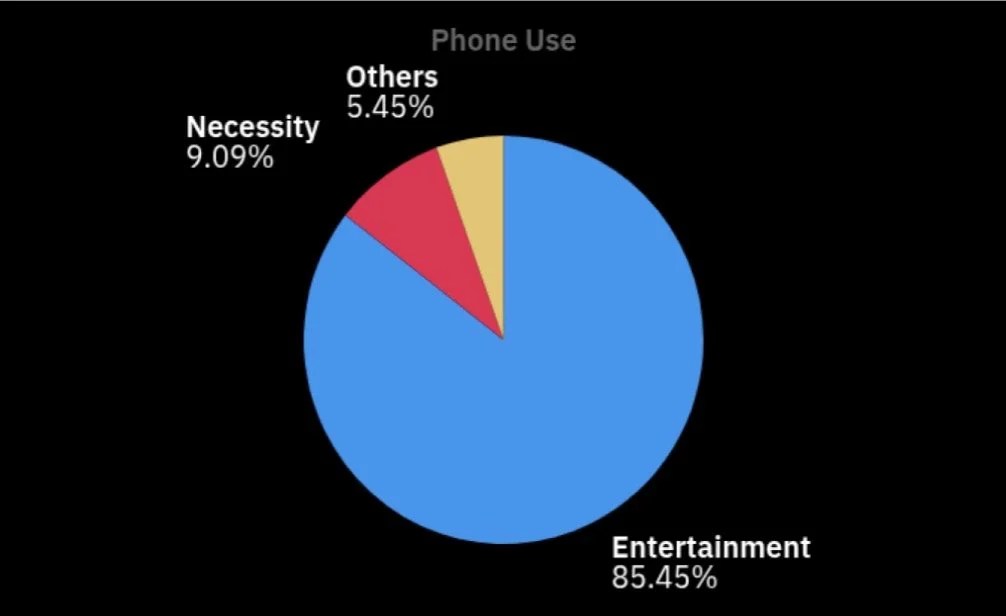
Chart By: Arturo Silva | February 6, 2026 | 50+ Estancia Student’s response to why they use their phone
Phones have become a source of instant gratification that, in the long run, make it more challenging to feel happiness in everyday life. People use their phones to scroll and play games, escaping their boredom. The reality behind constant phone use is that it goes far deeper than simple entertainment. Social media scrolling and unnecessary phone usage affects how our brains experience happiness.
Interview By: Arturo Silva | February 6, 2026 | Giselle, senior, shares how she uses her phone
When asked whether she uses her phone more for entertainment or necessity, 12th-grade student Giselle responded, “Honestly, it’s probably more out of entertainment.” According to Harvard Medical School, “The growing human brain is constantly building neural connections while pruning away less-used ones, and digital media use plays an active role in that process.” Phones provide quick bursts of dopamine, a chemical in the brain linked to happiness and reward.
When we repeatedly receive large amounts of dopamine very quickly—such as when watching videos or playing games—our brains begin to expect that level of stimulation all the time. As a result, normal activities can start to feel boring or unfulfilling.
For example, after scrolling through funny videos, something meaningful like going to the beach might feel less enjoyable, even though it normally wouldn’t.
Although using our phones feels good in the moment, it often comes at the cost of time, energy, and productivity. Giselle also added, “I know that our phone usage is not good for us… but I’m just having a good time.” Like many of us, we find ourselves scrolling without purpose, buying into consumerism, or sending random messages just to stay entertained. Over time, this can turn into a habit where our phones become our main source of enjoyment, even when we do not know why we picked them up in the first place.
Interview By: Arturo Silva | February 6, 2026 | As a senior, Ainslay explains how her phone usage affects her
The solution is moderation and self-control. This does not mean giving up phones completely—we all have free will and can choose how we spend our time. However, problems begin when we cannot stop ourselves from using our phones as our only escape. 12th-grade student Ainslay states, “I just have an addiction to my phone, simple as that.” Some people turn to their phones to avoid personal problems or uncomfortable emotions; without the phone, they lose that distraction and are forced to face the difficulties they experience.
Putting the phone down and paying attention to the world around us can help break this cycle. By limiting phone use, we give ourselves the chance to enjoy real experiences again and find happiness beyond a screen.
Associate professor of Harvard Medical School and pediatrician Dr. Michael Rich suggests looking out for digital media distractions, putting down our devices to be present with others and the world around us, and avoiding blue light emitted by screens before bed. When Estancia students were asked for their suggestions, they recommended: “Read a book, talk to friends, sports, nap, exercise, and coloring.”
The possibilities of what humanity can achieve and create is endless, but all this only comes into fruition when we put down the phone and experience life for ourselves, not through a screen.
