Learn more about Ap-Language edition
Since the year is ending many students are tasked with the question: What classes am I going to take next year? In this addition, we will be discussing our AP languages to give students insight into what the year will look like for each class.
In AP Language you will be challenged with what actually makes an argument. “I think some people are surprised about how complicated and algebraic arguments actually are,” Mr Abuel explains how most people believe just having an opinion make an argument, however, this is a common misconception. In this class you learn that statement is untrue and what makes an argument an argument. In AP Literature, you will start with children's books and then quickly shift to heavy existentialism, the idea that people must create their own meaning in life and often question their purpose, where the goal is to show how deep philosophical ideas can appear even in simple stories.

Mr Abuel, AP Lang, AP Lit, and English teacher
What do students struggle with the most in your classes?
Mr Abuel: In AP lang, most struggle with making sure they’re being very specific and controlled in how they use their language. Many times, they sit there and write but don’t actually answer the question or mistake summarizing versus arguing. People have a hard time noticing the difference because it feels like they're working to actually explain what they’ve read. But if you're taking an AP class, we’re working on the assumption you can already do that.
In AP Lit, some people struggle to analyze, interpret, and talk about the potential effects on the reader. Most summarize what they’ve read, which is great, but not what I’m asking for.
What would your recommendation be for studying and passing your AP class?
Mr Abuel: For both passing the class and passing the test, you just need to read. It’s one of those things that people don’t like to do but honestly, if you read, you become better at writing and thinking which increases your memory and your patience, all of which are essential skills in whatever field you’re choosing.
Next up is our AP Spanish classes, AP Spanish Language & Culture and AP Spanish Literature & Culture. Meet Mrs. Figueroa and Mrs. Velasco.
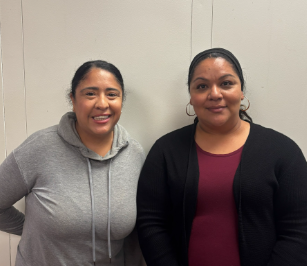
Ms. Figueroa (right) AP Spanish Lit, and Ms. Velasco (left), AP Spanish Lang and Culture
Let’s start with AP Spanish Language & Culture with Mrs. Velasco. In AP Spanish Lang, it prepares students for their AP exam. The AP exam is 5 segments, multiple choice, email, a 2 minute conversation, an interview, and lastly an essay. However, the test is always changing and focusing on culture more. Students are asked to compare their own culture with another Spanish-speaking culture. About 98% of the class is conducted in Spanish. The actual class itself includes themes and discussions about many different Spanish-Speaking countries and cultures.
What would your recommendation be for studying and passing AP Spanish Lang?
Mrs. Velasco: Concentrate on reading whether that be recent articles, or news because there’s a lot of presentation work where we research news from any country. This helps to be more aware of what’s happening in other cultures and other countries.
Next let’s discuss AP Spanish Literature, taught by Mrs. Figueroa. In AP Spanish Lit, you analyze art, read literature pieces, analyze, discuss, debate, and share ideas. You’ll cover many types of literature, poetry, novels, short stories, articles. However, this class requires a lot of memorization and requires the use of quizlets, practice quizzes, and AP reviews.
What do students struggle with the most in your class?
Mrs. Figueroa: The biggest thing is articulating their ideas from English into Spanish, even though many of them may be native speakers or heritage speakers. To put what they want to say into words and express it can often be difficult.
What would your recommendation be for studying and passing your class?
Mrs. Figueros: Honestly, lock in. It takes a lot of conversing and sometimes creating study groups. Many people think “Oh, if you’re a Spanish speaker, that class is gonna be super easy,” but AP Lang is always a little easier than AP Lit because of the amount of memorization. You need to know the author, country, historical context, and characters in many different units. You’re doing poetry, novels, short stories, and even newspapers so just focus on memorizing.
Written by Sophia Garcia and Jordyn Johnson